
Most drivers focus on tires, oil, and air filters when trying to save fuel. However, one often-overlooked component plays a surprisingly large role in fuel economy: the car battery. A healthy battery keeps your vehicle’s electrical system running smoothly. When it weakens, your engine works harder, and your fuel consumption rises. Understanding this connection can help you save money at the pump.
The Link Between Your Car Battery and Fuel Efficiency
Your car battery does more than start the engine. It powers the alternator, the fuel injection system, the ignition system, and dozens of electronic sensors. All of these systems work together to ensure the engine runs at peak efficiency.
When the battery is weak or failing, the alternator must work overtime to compensate. This puts extra load on the engine. As a result, the engine burns more fuel to generate the same amount of power. Studies have shown that a failing electrical system can reduce fuel efficiency by 10 to 20 percent. That is a significant cost over time.
Therefore, maintaining your battery is not just about avoiding a dead start in the morning. It is a practical step toward better fuel economy.
Signs Your Battery May Be Hurting Your Fuel Economy
It helps to know the warning signs before the problem gets worse. Many drivers ignore early symptoms and end up paying more in fuel costs than they would have spent on a simple battery check.
Here are common signs that your battery may be draining your fuel efficiency:
- Slow engine cranking when you start the car
- Dimming headlights, especially at idle
- Frequent need to jump-start the vehicle
- The battery warning light appearing on your dashboard
- Electrical accessories behaving erratically
- Poor air conditioning performance, leading to heavier engine load
If you notice any of these signs, it is time to inspect your battery. Additionally, even without obvious symptoms, a battery older than three to five years should be tested regularly.
How to Maintain Your Car Battery for Better Fuel Efficiency
Proper battery maintenance is simple. It does not require special skills or expensive tools. A little routine care goes a long way.
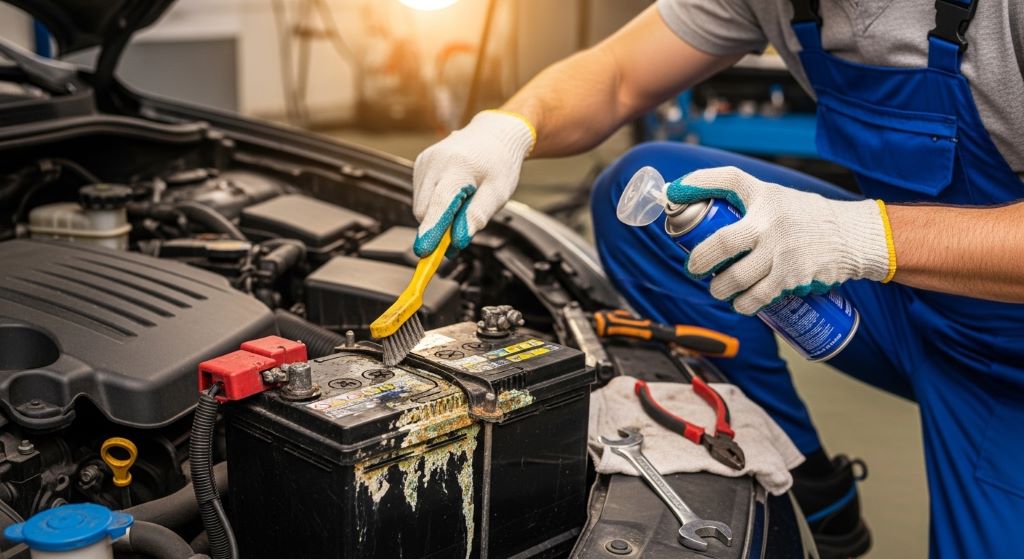
Keep the Battery Terminals Clean
Corrosion on battery terminals is one of the most common causes of poor electrical performance. Corroded terminals create resistance in the circuit. This forces the alternator to work harder, which draws more power from the engine and increases fuel consumption.
To clean the terminals, first disconnect the battery cables. Start with the negative cable. Then mix baking soda with water to form a paste. Apply it to the terminals with an old toothbrush. Rinse with clean water and dry thoroughly. Reconnect the cables and apply a thin layer of petroleum jelly to prevent future corrosion.
This simple step should be done every six months or whenever you notice a white or bluish buildup around the terminals.
Check the Battery Voltage Regularly
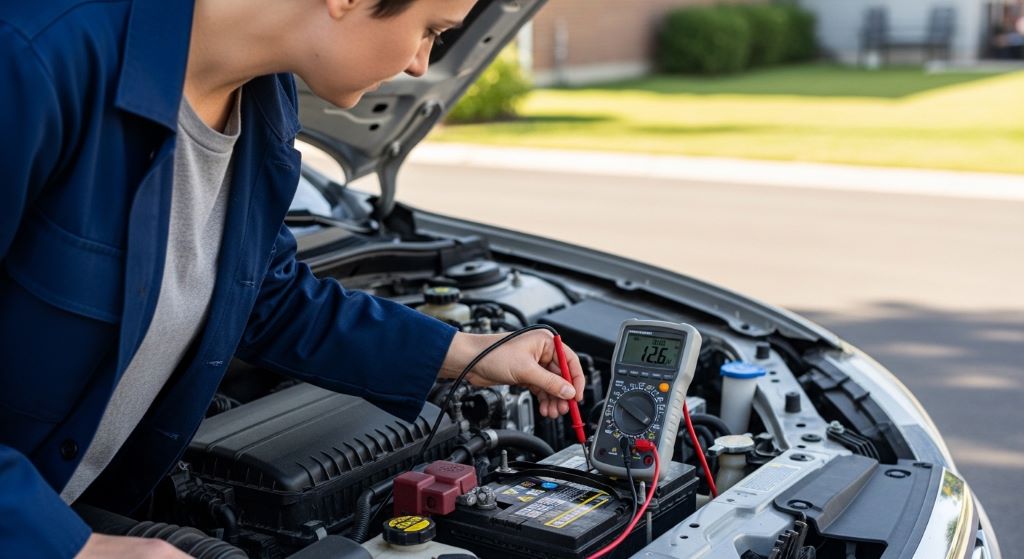
A fully charged car battery should read between 12.6 and 12.8 volts when the engine is off. When the engine is running, the voltage should be between 13.7 and 14.7 volts. This range indicates that the alternator is charging the battery properly.
You can check this with an inexpensive multimeter available at any auto parts store. If the resting voltage drops below 12.4 volts, the battery is partially discharged. Below 12.0 volts, the battery is significantly weakened and may be hurting your fuel efficiency.
Regular voltage checks help you catch problems early. Therefore, make it a habit to test your battery every three months or before long trips.
Secure the Battery Properly
Vibration is one of the leading causes of internal battery damage. A battery that moves around in its tray can develop micro-cracks in its internal plates. This reduces its capacity and lifespan.
Always ensure the battery is held firmly in place with its mounting bracket. Check the bracket for rust or damage. Replace it if necessary. This is a small detail, but it protects your investment and keeps the battery performing well over the long term.
Avoid Short Trips When Possible
Short trips are hard on car batteries. The battery uses a burst of energy to start the engine. Normally, the alternator recharges this energy during a longer drive. However, if most of your drives are under ten minutes, the battery never fully recharges.
Over time, repeatedly partially charged cycles weaken the battery. This leads to the problems discussed earlier: the alternator overworking, the engine burning more fuel, and your fuel economy dropping.
If short trips are unavoidable, consider using a battery maintainer or trickle charger overnight. This keeps the battery at full charge and extends its life significantly.
Park in a Garage or Shaded Area
Extreme heat and cold affect battery performance. High temperatures accelerate the chemical reaction inside the battery and can cause it to discharge faster. Cold temperatures reduce the battery’s ability to deliver current, which forces the engine to crank longer and burn more fuel on startup.
Parking in a garage or shaded area moderates these temperature extremes. In very cold climates, a battery blanket or insulating wrap can help the battery maintain its charge overnight. Additionally, warming up the car for a minute or two in cold weather gives the battery time to stabilize before heavy electrical loads are applied.
Turn Off Electrical Accessories When Not Needed
Every electrical accessory in your car draws power from the battery and the alternator. Air conditioning, heated seats, rear window defrosters, and infotainment systems all add to the electrical load.
When the alternator is under heavy load, it draws more mechanical energy from the engine. This directly increases fuel consumption. Turning off accessories you are not actively using reduces the load. It gives the alternator and battery an easier job, which helps the engine operate more efficiently.
This habit is especially helpful during city driving, where the engine is already working hard with frequent stops and starts.
When to Replace Your Car Battery
Even with excellent maintenance, batteries do not last forever. Most car batteries have a lifespan of three to five years. Some high-quality batteries can last up to seven years under ideal conditions.
However, a battery that is kept beyond its useful life becomes a liability. It forces other components to compensate for its weakness. This increases wear on the alternator and negatively affects fuel efficiency.
If your battery is more than four years old, have it tested professionally at an auto parts store or service center. Many offer free battery testing. A load test is more accurate than a simple voltage check. It shows how well the battery performs under the demands of starting the engine.
Replacing an old battery before it fails completely is always cheaper than dealing with a breakdown or the hidden fuel costs of a failing electrical system.
Additional Tips to Maximize Fuel Efficiency
Battery maintenance works best as part of a broader approach to vehicle care. Here are a few additional practices that complement good battery health:
- Keep your tires properly inflated. Underinflated tires create more rolling resistance and force the engine to work harder.
- Replace air filters regularly. A clogged air filter restricts airflow and causes the engine to burn more fuel.
- Use the correct grade of engine oil. The wrong viscosity increases internal friction and reduces efficiency.
- Keep up with spark plug replacements. Worn spark plugs cause incomplete combustion, which wastes fuel.
- Have the charging system inspected annually. This includes the alternator and voltage regulator, not just the battery.
Each of these steps supports the others. Together, they create a well-maintained vehicle that gets the most out of every tank of fuel.
Conclusion
Improving fuel efficiency does not always require expensive upgrades or changes in driving habits. Sometimes, the solution is as straightforward as taking better care of your car battery. A healthy battery keeps the electrical system running efficiently. This reduces the burden on the alternator and engine, which in turn lowers fuel consumption.
By cleaning the terminals, checking the voltage regularly, avoiding short trips, and replacing the battery when needed, you can see a real improvement in your fuel economy. Additionally, combining these habits with general vehicle maintenance gives you the best possible results.
Start with a battery inspection today. It is a small step that can lead to noticeable savings over time.
Frequently Asked Questions
Can a weak car battery really affect fuel efficiency?
Yes. A weak battery forces the alternator to work harder to maintain the electrical system. This places extra mechanical load on the engine, which increases fuel consumption. In some cases, a failing battery can reduce fuel efficiency by 10 to 20 percent.
How often should I check my car battery?
You should check your battery voltage at least once every three months. Additionally, have a professional load test done once a year or whenever you notice symptoms like slow cranking or dimming headlights. Batteries older than three years should be tested more frequently.
Does extreme weather affect battery performance and fuel economy?
Yes. Cold weather reduces a battery’s ability to deliver power, causing the engine to work harder during startup. Hot weather accelerates battery discharge and internal damage. Both extremes can lead to increased fuel consumption. Parking in a garage or shaded area helps reduce these effects.
How do I know when it is time to replace my car battery?
Signs that your battery needs replacement include slow engine cranking, a battery warning light on the dashboard, frequent need for jump-starts, and a battery that is more than four years old. A professional load test will give you a definitive answer.
Can turning off car accessories really improve fuel economy?
Yes. Every accessory that draws electrical power adds load to the alternator. The alternator, in turn, draws mechanical energy from the engine. Reducing unnecessary electrical loads, such as rear defrosters, heated seats, and infotainment systems when not in use, helps the engine run more efficiently and can modestly improve fuel economy.
Related Topics:
How to Choose the Right Automobile Polishing Pads for Different Car Paint Types
How to Optimize Automobile Control with Steering Input Techniques
