
A road trip promises freedom. However, an unprepared car can turn that freedom into a roadside nightmare. Long drives stress every part of a vehicle. Tires heat up, fluids burn off, and brakes work double time on hills. Therefore, a small problem ignored at home becomes a highway breakdown far from help. The good news is that most trip failures are preventable. A one-hour check catches the vast majority of them. According to industry watchdogs like https://bereviewers.com/ and data from AAA, roadside assistance calls spike dramatically during peak travel seasons, with most breakdowns tracing directly back to overlooked maintenance issues. In this post, you will learn how to prepare your vehicle the right way. From tires to paperwork to packing, every step is simple and worth the time. Read on, because a prepared car is the difference between a memorable trip and a miserable one.
Key Takeaways
- Check tire pressure and tread before every long drive, including the spare.
- Inspect oil, coolant, brake, and washer fluid levels a week before departure.
- Test the battery, because heat and long drives strain old cells.
- Pack an emergency kit with water, snacks, lights, and a first-aid kit.
- Load cargo evenly and never block the mirrors or rear view.
- Plan rest stops every two hours to stay fresh and alert.
Tires, Brakes, and the Parts That Touch the Road
Your tires are the only parts of your car that touch the road. Therefore, they deserve the first and longest look. A tire failure at highway speed is one of the most dangerous events on a road trip. Additionally, tire problems cause a huge share of summer breakdowns.
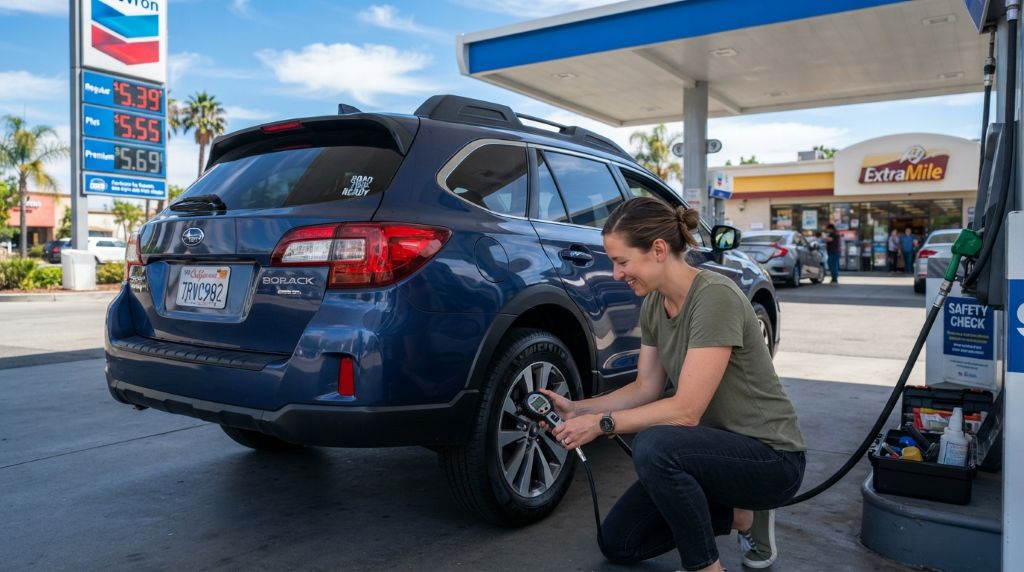
Start with pressure. Check all four tires plus the spare when they are cold. Use the number printed on the driver’s door sticker, not the number on the tire itself. Additionally, remember that pressure changes with temperature. However, underinflation remains the biggest tire killer on long drives. It builds heat, and heat destroys tires from the inside.
Next, inspect the tread. Insert a coin into the main grooves and check the depth. Additionally, look for uneven wear, cracks, bulges, or embedded objects. Uneven wear often points to alignment or suspension issues. Consequently, a worn edge is a warning sign, not just a cosmetic flaw.
Then move to the brakes. Listen for squealing, grinding, or clicking sounds on your next drive. Additionally, pay attention to a soft or spongy pedal, or a car that pulls to one side when braking. According to the National Highway Traffic Safety Administration, brake problems contribute to a meaningful share of highway crashes each year. Therefore, any brake warning sign before a long trip deserves a professional inspection immediately.
Check the steering and suspension too. A steering wheel that shakes at speed, or a car that bounces heavily over bumps, signals worn components. Additionally, uneven tire wear confirms the same story. Therefore, get an alignment or suspension check if your car shows these signs.
Finally, look at the wipers and lights, because they are your visibility on the road. Worn wiper blades streak and smear instead of clearing. Additionally, test every light, including brake lights and turn signals, with a helper. Consequently, you stay legal and visible in rain or night driving. These checks cost nothing but an hour, and they prevent the most common roadside failures.
Fluids, Battery, and a Basic Maintenance Check
Fluids are the lifeblood of your vehicle. Long trips push them harder than daily commutes. Therefore, check each one about a week before departure. That timing lets you fix leaks and top up without rushing.
- Engine oil: check the level and color on the dipstick.
- Coolant: confirm the level between the marks when the engine is cold.
- Brake fluid: verify the level and look for a dark color.
- Power steering and transmission fluid: check per your owner’s manual.
- Washer fluid: fill it fully, because highway bugs arrive fast.
Engine oil comes first. If your oil change is due soon, do it before the trip rather than after. Additionally, check for leaks under the car after it parks overnight. A small drip at home becomes a big drip after 500 miles. Therefore, fresh oil and a clean spot under the car are cheap insurance.
Coolant deserves respect. Never open a hot radiator cap, because the system is under pressure. However, do check the reservoir level when the engine is cold. Low coolant causes overheating, and overheating destroys engines quickly on long climbs. According to AAA, cooling system failures are among the top causes of summer breakdowns. Consequently, a two-minute check protects your whole trip.
Next, test the battery. Most batteries last three to five years, and heat shortens their life. Therefore, check the manufacture date on the label. Additionally, look for white or green corrosion on the terminals and clean it with a wire brush. Many auto parts stores test batteries for free. Consequently, a five-minute test tells you whether the battery will survive the return trip.
Finish with the belts and hoses. Press the belts and check for cracks, glazing, or fraying. Additionally, squeeze the coolant hoses and feel for soft spots or visible leaks. A broken belt on a remote highway means a long wait for a tow. Therefore, replace any belt or hose that looks aged, even if it still works today.
Pack an Emergency Kit and Load Your Car Right
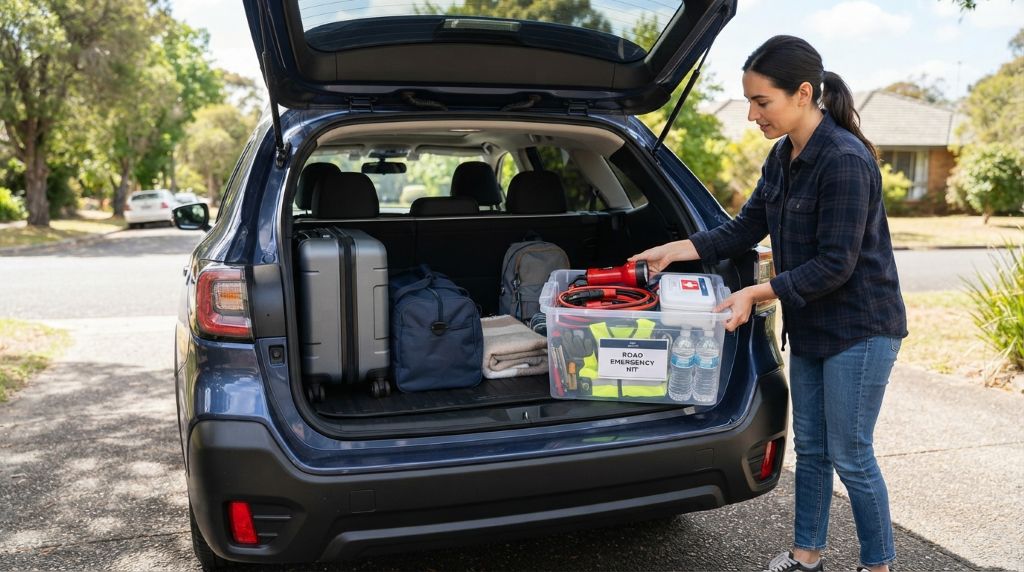
Preparation does not end with the car’s health. What you pack decides how a bad day plays out. A flat tire in the rain is miserable with nothing in the trunk. However, the right kit turns the same event into a short pause. Therefore, build your emergency kit before you load a single suitcase.
Your road trip emergency kit should include:
- A jack and a properly inflated spare tire, plus a lug wrench.
- Jumper cables or a portable jump starter.
- A first-aid kit with any personal medications.
- Water and snacks for every traveler.
- A flashlight with spare batteries.
- A phone charger and a power bank.
- Roadside reflective triangles or a safety vest.
- A small fire extinguisher rated for vehicles.
- Paper maps or offline navigation for dead zones.
Loading the car matters as much as packing it. Heavy items belong low and centered, ideally over the rear axle. Additionally, secure loose items, because they become projectiles in a sudden stop. Therefore, use the trunk or cargo straps instead of open piles on seats.
Keep your sightlines clear at all times. Never stack luggage above the rear seatback height in a hatchback or SUV. Additionally, check that the mirrors stay fully adjustable after loading. Consequently, you can see traffic around you for the entire trip.
Roof racks need special care too. Check the manufacturer’s weight limit and never exceed it. Additionally, distribute roof cargo evenly and recheck the straps at every stop, because wind works them loose. Therefore, a two-minute strap check at each fuel stop prevents a lost load on the highway.
Finally, keep essentials inside the cabin. Pack water, snacks, medications, and chargers where passengers can reach them. Additionally, store your documents, wallet, and phone in the same spot every time. Consequently, nothing important gets buried under luggage when you need it fast.
Plan the Route and the Rest Stops
A prepared car needs a prepared driver. Fatigue causes a huge share of highway accidents. According to the National Highway Traffic Safety Administration, drowsy driving causes thousands of crashes every year. Therefore, plan your driving schedule with the same care as your vehicle checks.
Build rest stops into the route before you leave. Aim for a break every two hours or 100 miles, whichever comes first. Additionally, share driving duties when you travel with another licensed adult. Consequently, fresh eyes stay behind the wheel all day long.
Plan your fuel stops too. Some highways have long stretches without services, especially in remote regions. Therefore, check the distances between gas stations on your route in advance. Additionally, never run the tank below a quarter full in isolated areas. A familiar stretch of highway can surprise you with a closed station.
Check the weather along the entire route, not just at your destination. Mountain passes, desert stretches, and storm corridors each carry different risks. Additionally, know the seasonal risks of your route, such as summer heat or early snow at elevation. Consequently, you adjust your timing before conditions surprise you.
Finally, get your paperwork in order before departure. Confirm your license, registration, and insurance are current and in the car. Additionally, check that your roadside assistance membership is active and its details saved offline. Therefore, help is one phone call away wherever the trip takes you.
Conclusion
A long road trip rewards preparation. You now know how to check your tires, brakes, fluids, and battery the right way. Additionally, you know how to pack an emergency kit, load your cargo safely, and plan a route with rest built in. Following these road safety tips to keep in mind on the road can also help you stay prepared and reduce avoidable risks throughout your journey.
Therefore, start this week. Give the car its one-hour inspection and schedule any needed service now. Then build your kit, plan your stops, and check the paperwork. A ready car and a rested driver make every mile safer, so take the first step and enjoy the drive as much as the destination.
FAQs
How far in advance should I prepare my car for a road trip?
Start one to two weeks before departure. That window leaves time for repairs. However, do the final tire and fluid check the day before you leave.
What are the most common causes of road trip breakdowns?
Battery failures, flat tires, and cooling system problems top the AAA list. Therefore, check those three systems first. Additionally, low oil causes many avoidable engine failures.
Should I get my car serviced before a long trip?
Yes, if any maintenance is due soon. An oil change, tire rotation, and brake check cost far less than a tow. Additionally, ask the shop to inspect belts and hoses while it is up.
What should I do if my car breaks down on the highway?
Pull fully off the road, turn on hazard lights, and set up triangles if safe. Additionally, stay in the car with your belt on on busy highways. Therefore, call roadside assistance from a safe spot.
How often should I stop and rest on a long drive?
Stop every two hours or 100 miles, whichever comes first. Additionally, take a longer break at meal times. Consequently, fatigue never builds to dangerous levels.
