
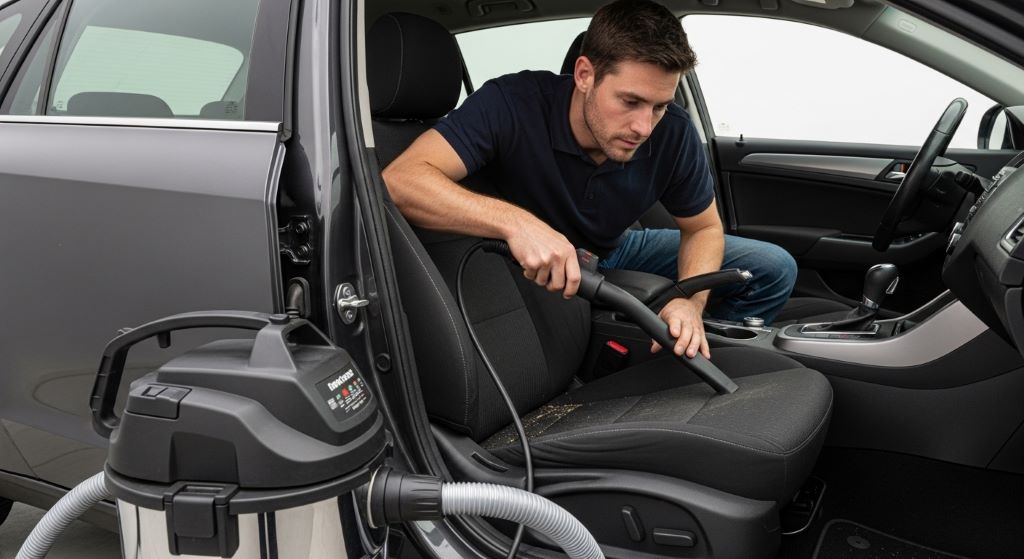
Keeping your car clean on the inside takes more than a quick wipe-down. Dirt, crumbs, pet hair, and dust build up fast. A regular household vacuum often cannot handle the job. That is where a shop vacuum comes in. However, not every shop vacuum is right for car cleaning. Choosing the wrong one can leave you frustrated and your seats still full of debris.
This guide will help you find the right machine. You will learn what features matter, which specs to ignore, and how to get professional-level results without leaving your driveway.
Why a Shop Vacuum Is Better for Car Cleaning
Most home vacuums are designed for flat floors and carpets. They struggle with tight spaces, deep seat crevices, and wet messes. Shop vacuums, on the other hand, are built for tough jobs. They have stronger suction, bigger tanks, and more flexible attachments.
For car detailing at home, a shop vacuum gives you the power and reach you need. It handles dry debris like sand and dirt just as well as wet spills from coffee or rain-soaked floors. Additionally, the hose is usually longer, which means you can reach every corner of your vehicle without constantly repositioning the unit.
Therefore, if you are serious about keeping your car looking its best, a shop vacuum is one of the most important detailing tools you can own.
Know Your Car’s Cleaning Needs Before You Buy
Before shopping, think about what your car actually needs. Do you have kids or pets? Do you drive on dirt roads? Do you eat in your car often?
Heavy users need a machine with strong suction and a large tank. If you detail your car once a month and it stays fairly clean, a smaller and lighter model may be all you need. Knowing your situation helps you avoid overspending on features you will never use — or underspending and ending up with something too weak for the job.
Key Features to Look For
Suction Power and Motor Strength
Suction power is the most important factor. It is measured in horsepower (HP) or air watts. For car cleaning, look for at least 4 to 5 HP or 100 air watts. Anything less may struggle with embedded dirt in carpet fibers.
More power is not always better, though. Very high-powered vacuums can be loud and heavy. For home use, a mid-range model with consistent suction often outperforms a high-powered unit that overheats quickly.
Tank Size and Portability
Tank size is measured in gallons. For car interiors, a 4 to 6-gallon tank is usually enough. Larger tanks hold more debris before needing to be emptied, but they also add bulk and weight.
If you move the vacuum around your car frequently, portability matters. Look for models with a compact footprint, sturdy wheels, and a comfortable carry handle. A lightweight design makes the job less tiring, especially if you are detailing multiple vehicles.
Hose Length and Flexibility
A short hose is one of the most common complaints about budget shop vacuums. For car work, you want a hose that is at least 6 feet long. Ideally, 8 to 10 feet gives you full reach from the trunk to the front dashboard without dragging the unit into the car.
Flexibility matters too. A rigid hose is harder to maneuver around headrests, under seats, and into door pockets. Look for a hose with a soft, corrugated design that bends easily without kinking.
Wet and Dry Capability
A wet/dry shop vacuum is far more useful than a dry-only model. Spills happen. Rain gets tracked in. Shampoo residue sits in carpet fibers after cleaning. A wet/dry vacuum handles all of these situations without any damage to the motor.
Make sure the model you choose clearly states it handles both wet and dry material. Also check that switching between modes is simple. Some models require you to remove the filter before vacuuming liquids. Skipping this step can damage the machine.
Filtration System
Good filtration keeps the exhaust air clean. This matters more than most buyers realize. A vacuum with poor filtration blows fine dust back into the car while you work. That defeats the entire purpose.
Look for a vacuum with a HEPA filter or a multi-stage filtration system. These capture fine particles, allergens, and dust without reducing airflow. Additionally, check whether the filter is washable or needs to be replaced regularly. Washable filters save money over time.
Noise Level
Shop vacuums can be loud. Some models exceed 80 decibels, which is uncomfortable for extended use in a closed garage or small driveway space. If noise is a concern, look for models marketed as “quiet operation” or check the decibel rating in the product specs.
However, keep in mind that very quiet models sometimes sacrifice suction. Read user reviews to find the right balance between power and noise for your situation.
Attachments and Accessories
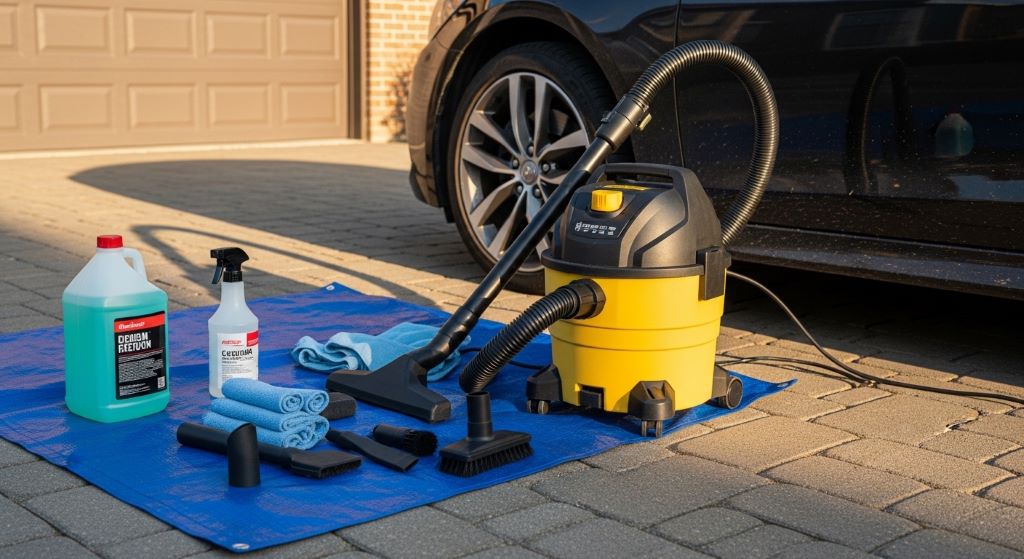
The right attachments turn a good vacuum into a great car interior vacuum. Here are the most useful ones to look for:
- Crevice tool: reaches between seats, into console gaps, and along door panels
- Brush attachment: loosens embedded dirt from upholstery and carpet fibers
- Upholstery nozzle: wide and flat for cleaning seat surfaces quickly
- Extension wand: adds reach for rear cargo areas and high dashboard vents
Not all vacuums include every attachment in the box. Check what comes standard and what costs extra. Sometimes buying a vacuum with a full accessory kit saves more money than purchasing attachments separately.
Corded vs. Cordless Shop Vacuums
Corded models plug into a standard outlet and deliver consistent power. They do not run out of charge mid-task, which is a real advantage during a full detail session.
Cordless models offer more freedom of movement. They are great if your driveway is far from an outlet. However, battery life is a genuine limitation. Most cordless shop vacuums run for 20 to 40 minutes on a single charge. For a thorough clean, that may not be enough.
For most home detailers, a corded model with a long power cord is the more practical choice. An extension cord can easily solve any reach issues.
Size and Storage Considerations
Think about where you will store the vacuum when it is not in use. A large canister model works well if you have a garage with shelf space. If storage is tight, a compact or wall-mountable model makes more sense.
Some shop vacuums are designed to mount directly to the wall. This is a smart option for small garages. Others are stackable or designed with a low profile for easy sliding under shelves.
Budget Guide: What to Expect at Each Price Point
Under $50: Entry-level models with basic suction and minimal attachments. Fine for light, occasional use. Not ideal for deep cleaning.
$50 to $100: The sweet spot for most home users. You get solid suction, decent filtration, and a useful set of attachments. Most mid-range models in this range are reliable and easy to use.
$100 to $200: Professional-grade performance for home use. Better filtration, quieter operation, longer hoses, and more durable construction. Worth the investment if you detail regularly.
Over $200: Overkill for most home users unless you run a small mobile detailing operation. These models are built for commercial use and may be heavier and larger than needed.
Tips for Getting the Best Results
Owning the right vacuum is only part of the equation. How you use it matters just as much. Here are a few habits that improve your results every time:
- Start from the top and work your way down. Clean the dashboard and seats before tackling the floor.
- Use the crevice tool in every seam and gap. Most dirt hides in these spots.
- Run the brush attachment over upholstery before vacuuming to loosen embedded debris.
- Empty the tank before each use. A full tank reduces suction significantly.
- Clean or replace the filter regularly. A clogged filter has the same effect as a full tank.
These small habits, combined with the right equipment, make home car detailing much more effective. The best detailing tools only deliver their full value when used correctly.
Conclusion
Choosing the best shop vacuum for car detailing at home comes down to a few key decisions. You need enough suction power to lift embedded dirt, a hose long enough to reach every corner, and good filtration to keep the air clean while you work. Wet/dry capability, the right attachments, and a size that fits your storage space round out the list.
You do not need to spend a fortune. A well-chosen mid-range model handles the job beautifully. Focus on the features that match your actual needs, read user reviews, and check what attachments are included.
With the right car interior vacuum in hand, keeping your car spotless at home becomes a simple, satisfying routine rather than a chore.
Frequently Asked Questions
What is the best suction power for a car interior vacuum?
For most cars, 4 to 5 HP or around 100 air watts is ideal. This level handles carpet fibers, pet hair, and general debris without being too heavy or loud for home use.
Can I use a regular shop vacuum for wet car spills?
Only if it is rated for wet use. Always check the label before vacuuming liquids. Using a dry-only vacuum on wet material can damage the motor permanently. A wet/dry model is the safer and smarter choice.
How long of a hose do I need for detailing a full-size car?
At least 6 feet, though 8 to 10 feet is more comfortable. A longer hose lets you reach the back seats and cargo area without dragging the vacuum inside the car.
Are cordless shop vacuums good enough for car detailing?
They are convenient, but battery life is a real limitation. Most cordless models last 20 to 40 minutes per charge, which may not be enough for a thorough detail. A corded model is more reliable for longer sessions.
How often should I clean or replace the vacuum filter?
For regular home use, clean the filter after every two to three uses. Replace it every three to six months depending on how dirty your car gets. A clean filter maintains suction and keeps exhaust air clean.
Related Topics:
How to Fix Burning Smell from Car When Accelerating Slowly
How to Clean a Car at Home With Essential Tools
