
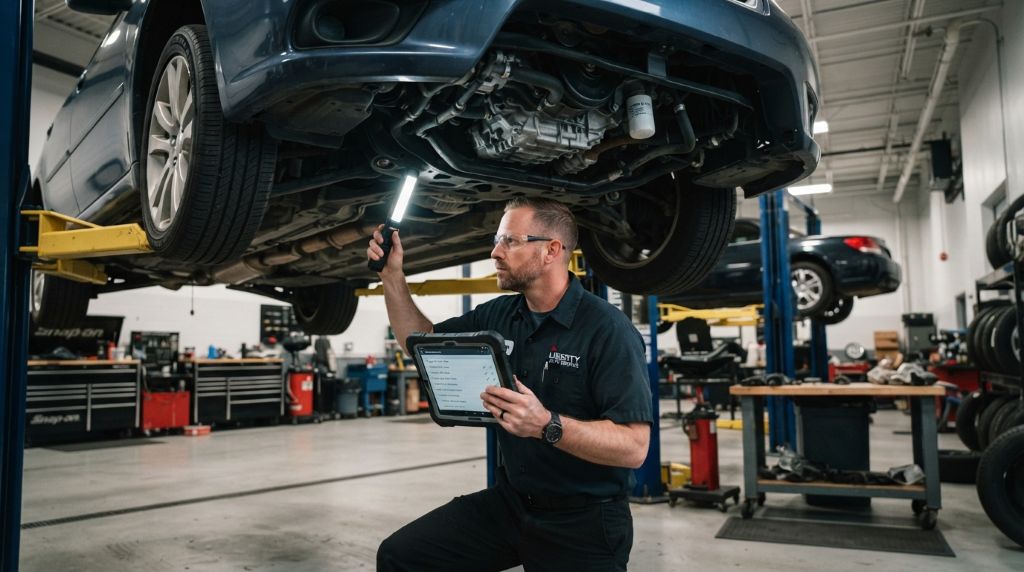
Buying a used car saves money. However, it also carries real risk. A solid used car inspection checklist protects your wallet and your safety. Used car prices have climbed in recent years. According to Edmunds, the average used vehicle in the United States now costs over $26,000. Therefore, a single missed defect can turn a bargain into a money pit. This article walks through a complete inspection routine recommended by the automotive experts at VehicleTradeUS.com. It covers documents, exterior, interior, engine, and the test drive. Use it, and you will negotiate from a position of strength.
Key Takeaways
- A used car inspection checklist covers documents, body, interior, engine, tires, and the test drive.
- Always pull a vehicle history report before you visit the seller.
- Never skip an independent pre-purchase inspection by a trusted mechanic.
- Small warning signs today often become expensive repairs tomorrow.
Why Every Buyer Needs a Used Car Inspection Checklist
A checklist keeps your emotions in check. Car shoppers often fall in love with a shiny hood and a fresh interior. Consequently, they ignore rust, leaks, and worn suspension parts. Data from Consumer Reports shows that nearly one in three used cars has at least one hidden issue. Additionally, repair costs have risen sharply. Labor rates at many shops now exceed $120 per hour. Therefore, ten minutes of careful looking can save thousands of dollars.
A checklist also protects you from fraud. Odometer tampering still happens. The National Highway Traffic Safety Administration estimates that more than 450,000 vehicles are sold each year with rolled-back odometers. Furthermore, flood-damaged vehicles often reappear on the market after major storms. A structured inspection flags these problems early.
Personal experience supports this. A friend once bought a low-mileage sedan from a private seller. The car looked perfect. However, a quick look under the floor mats revealed mud in the seat rails. The car had been through a flood. He walked away and saved himself from years of electrical gremlins. In short, the checklist works because it forces slow, deliberate thinking.
Before You Go: Papers and History Checks
Start your inspection at the kitchen table, not the parking lot. First, ask the seller for the vehicle title. Confirm the name on the title matches the seller’s ID. Mismatched names can signal a title jump or worse. Next, request service records. A car with documented oil changes and scheduled maintenance deserves more trust.
Then, pull a vehicle history report from Carfax or AutoCheck. These reports reveal accidents, ownership counts, liens, and title brands. A branded salvage title cuts resale value deeply. Additionally, compare the odometer reading in the report against the dashboard. Any backward movement is a red flag.
Check these documents before you travel:
- Title, free of liens and matching seller ID
- Full service and repair records
- Vehicle history report with no accident gaps
- Current registration and valid inspection stickers
- Two working keys, if the car came with a coded key system
Finally, verify the vehicle identification number on the dash against the title. A VIN that looks altered or does not match means stop the deal. Therefore, this paperwork phase filters out bad cars before you waste a Saturday.
Exterior Inspection: Body, Paint, and Glass
Walk around the car in daylight. Paint color should stay consistent across every panel. Repainted panels often signal accident repair. Run your hand along each panel edge. Rough edges or paint on rubber seals point to bodywork. Additionally, check the gaps between panels. Uneven gaps suggest frame damage or poor collision repair.
Look at the glass next. Small chips grow into long cracks. Check the windshield for stars and bullseyes. Then inspect each window for deep scratches. Moreover, test every door, the trunk, and the hood. They should open smoothly and latch firmly.
Rust deserves special attention. Push gently on the rocker panels and wheel arches with a gloved thumb. Soft, crumbling metal means structural corrosion. Structural rust is far worse than surface rust. It weakens the car and costs a fortune to fix properly. However, small bubbles around a wheel arch can often wait. Logic matters here. Repair cost should always scale with severity.
Do not forget the lights. Turn on every bulb, including brake lights and reverse lights. Ask a friend to watch while you press the pedals. Burned-out bulbs are cheap fixes. Yet they also hint at neglect elsewhere.
Interior and Electronics Check
Sit in the driver’s seat and sniff the air. A musty smell often means water leaks or flood history. Likewise, a sweet smell can indicate coolant leaks inside the cabin. Next, check every seat for rips, sagging springs, and crooked frames. Seat frames that shift when you wiggle may hide crash damage.
Test every electrical feature one by one. Roll each window up and down. Try every door lock from inside and out. Then check the air conditioning and heater at full blast. Compressor repairs can cost over $1,000. Therefore, a weak A/C deserves a price adjustment.
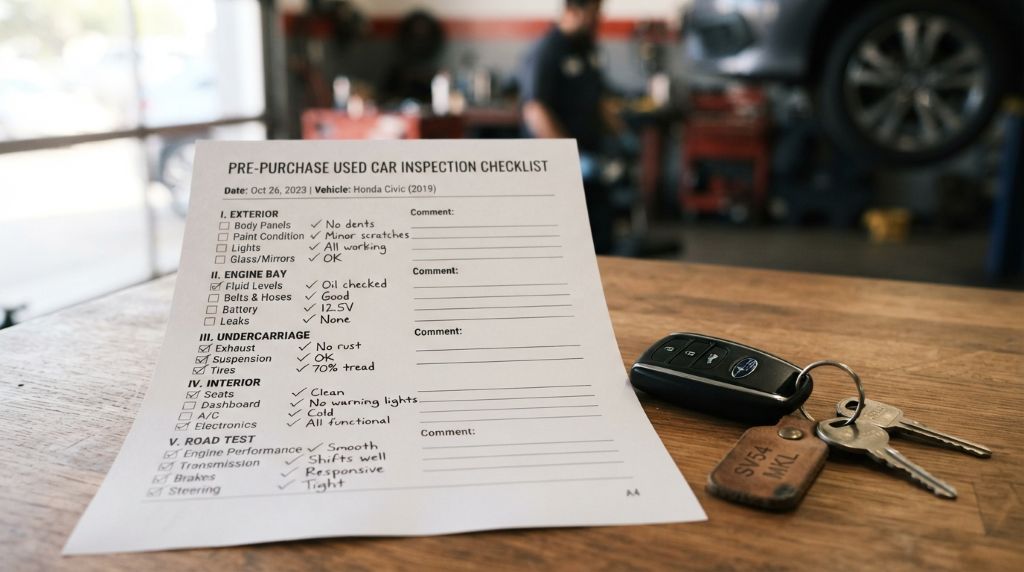
Work through this interior list:
- All power windows, locks, and mirrors
- Air conditioning and heating at every fan speed
- Every dashboard warning lamp during the bulb check
- Windshield wipers, washers, and defroster
- Radio, backup camera, and USB ports
- Seat belts, including retractors and latch buckles
- Spare tire, jack, and emergency tools in the trunk
Check the pedals and steering wheel too. A worn-out pedal with a low-mileage odometer suggests tampering. Similarly, a shiny steering wheel with 30,000 claimed miles raises doubts. Trust patterns, not stories.
Under the Hood: Engine and Fluid Checks
Open the hood with the engine cold. First, look at the overall cleanliness. A thick layer of fresh oil on the block hides leaks. Next, pull the dipstick. Clean oil sits between the marks and shows amber color. Milky, chocolate-colored oil signals coolant mixing, often from a blown head gasket. Therefore, walk away from milky oil.
Check every fluid level. This includes brake fluid, coolant, transmission fluid, and power steering fluid. Low levels point to leaks or poor maintenance. Additionally, look under the car for spots on the ground. Fresh puddles tell you more than any seller’s promise.
Inspect belts and hoses next. Squeeze the radiator hoses. They should feel firm, not soft or crunchy. Cracked belts snap without warning. Moreover, check the battery terminals for white, flaky corrosion. Bring a code reader if possible. Stored trouble codes reveal problems the seller may not mention.
Finally, look at the engine wiring. Frayed harnesses and melted plugs hint at amateur repairs. Electrical faults cost more time and money than mechanical ones. A careful engine check takes twenty minutes. Those twenty minutes decide whether the deal survives.
Tires, Brakes, and Suspension
Tires tell stories about the whole car. First, check the tread depth with a coin. Insert a coin into the groove. If the outer band stays visible, the tire needs replacing soon. Next, compare wear across all four tires. Uneven wear signals alignment problems or worn suspension parts.
Wiggle the top of each tire while the car sits parked. Any clicking or movement suggests bad wheel bearings. Additionally, push down hard on each corner of the car. The body should rebound once, not bounce like a boat. Worn shocks fail quickly and cost real money.
Brakes need a test drive and a look. Many wheels let you peek at the pads through the spokes. Pads thinner than a quarter need replacement. During the drive, brake gently at low speed. Squealing, grinding, or a pulsing pedal demands attention. According to RepairPal, a full brake job on a midsize sedan can run from $300 to $1,000. Therefore, weak brakes give you strong negotiation power.
The Test Drive: Where the Truth Comes Out
The test drive deserves at least thirty minutes. Start the engine cold if possible. Cold starts reveal starting issues, smoke, and rough idle. Watch the exhaust. Blue smoke means burning oil. White smoke often means coolant is leaking into the engine.
Drive on both smooth and rough roads. Listen for clunks over bumps. Feel for vibrations at highway speed. Steering that pulls to one side points to alignment or tire trouble. Additionally, test the brakes firmly at a safe speed. The car should stop straight and fast.
Check the transmission carefully. On hills, the gearbox should shift smoothly without flares or hard clunks. Manual transmissions need smooth engagement in every gear. Grinding synchros cost a lot to fix.
After the drive, idle the car and look underneath. New leaks appear after a warm engine works hard. Park over clean pavement for five minutes. Fresh drops tell the final story.
Final Step: Get a Professional Inspection
No checklist replaces a trained mechanic. A pre-purchase inspection costs $100 to $200 in most markets. That small fee prevents disaster purchases. One mechanic found a cracked subframe on a car a friend almost bought. The repair quote exceeded $2,000. The seller dropped the price by that exact amount. Therefore, always insist on an independent inspection. Honest sellers agree without complaint. Refusal tells you everything.
FAQs
How long does a full used car inspection take?
A careful self-inspection takes 45 to 60 minutes. Add 30 minutes for the test drive. A professional inspection usually takes one to two hours at a shop.
Can I inspect a used car myself without a mechanic?
Yes, a detailed used car inspection checklist catches most visible problems. However, only a mechanic can spot hidden engine, frame, or electronic faults. Combine both for full protection.
What are the biggest red flags when buying a used car?
Milky oil, rusted structural metal, mismatched VINs, salvaged titles, and flood signs top the list. Additionally, sellers who refuse independent inspections should lose your trust immediately.
Should I buy a used car with an accident on its history report?
Minor cosmetic accidents are often acceptable. However, structural or airbag-deploying crashes lower the car’s value and safety. Get a mechanic to check the frame before you decide.
Is a vehicle history report really necessary?
Yes. Reports from Carfax or AutoCheck reveal accidents, title brands, liens, and odometer rollbacks. The small fee protects you from expensive hidden problems.
Final Thoughts
A used car inspection checklist turns a risky purchase into a confident one. For a more detailed approach, follow this guide to vehicle inspections to understand what to check before making a decision. Work slowly, bring a friend, and take notes. Then use every flaw as a negotiation point. Have you ever caught a hidden problem before buying? Share your story in the comments below, and pass this checklist along to anyone shopping for their next car.
