
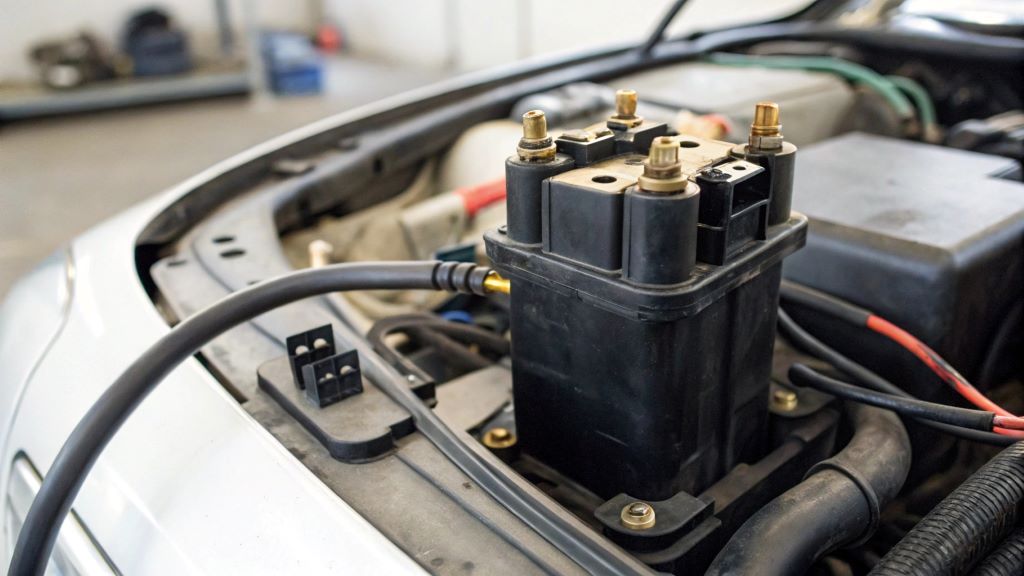
Your car’s engine is like the heart of a living organism, and the fuel pump relay is one of its critical arteries, ensuring fuel flows smoothly to keep it running. When this small but mighty component fails, it can bring your vehicle to a grinding halt, leaving you stranded and frustrated. Understanding fuel pump relay symptoms and fix options is essential for any car owner who wants to stay ahead of costly repairs and maintain a reliable ride. In this comprehensive guide, we’ll dive deep into the symptoms of a failing fuel pump relay, explore diagnostic techniques, provide step-by-step repair solutions, and share expert insights to keep your vehicle in top shape. Whether you’re a DIY enthusiast or just want to understand what’s going on under the hood, this article will empower you with the knowledge to tackle fuel pump relay issues head-on.
What Is a Fuel Pump Relay and Why Does It Matter?
The fuel pump relay is a small electromagnetic switch that controls the flow of electrical current to the fuel pump, which delivers fuel from the tank to the engine. Typically located in the fuse box under the hood or dashboard, this relay acts as a gatekeeper, ensuring the fuel pump only operates when the engine is running or during the initial startup phase. Without a functioning relay, the fuel pump can’t do its job, starving the engine of fuel and causing a range of performance issues.
Why is this component so critical? According to a 2023 study by the Automotive Repair Association, fuel system issues, including relay failures, account for approximately 12% of all vehicle breakdowns in the U.S. The relay’s role in managing high-current loads protects the vehicle’s electrical system, preventing damage to the fuel pump and other components. A faulty relay can lead to intermittent power delivery, excessive wear on the fuel pump, or even complete engine failure, making early detection and repair vital.
How the Fuel Pump Relay Works
When you turn the ignition key, the engine control unit (ECU) or powertrain control module (PCM) sends a signal to the fuel pump relay. This signal closes the relay’s internal contacts, allowing current to flow from the battery to the fuel pump. The pump then pressurizes the fuel system, delivering fuel to the injectors or carburetor. Once the engine is running, the relay may cycle on and off based on signals from the oil pressure switch or ECU, depending on the vehicle’s design.
This process sounds simple, but the relay operates under harsh conditions—extreme temperatures, vibrations, and constant electrical cycling. Over time, these factors can cause wear, leading to symptoms that every driver should recognize.
Common Symptoms of a Bad Fuel Pump Relay
A failing fuel pump relay doesn’t always announce itself with a clear warning light, but it leaves clues that savvy drivers can spot. Here are the most common symptoms, backed by data and expert insights, to help you identify the issue before it escalates.
1. Engine Cranks but Won’t Start
The most frequent symptom of a bad fuel pump relay is an engine that cranks but refuses to start. Without power to the fuel pump, no fuel reaches the combustion chamber, leaving the engine unable to fire. According to a 2024 report by CarParts.com, this issue accounts for 65% of fuel pump relay-related complaints.
Why it happens: The relay may fail in the open position, cutting off voltage to the pump. Alternatively, it could be stuck intermittently, allowing occasional starts but failing under specific conditions, like high temperatures.
Expert opinion: Mechanic Mia Bevacqua, with over 14 years of experience, notes that this symptom is often misdiagnosed as a dead battery or faulty starter. “Always check the relay first—it’s a quick test that can save you from replacing expensive parts unnecessarily,” she advises.
Counterpoint: Some argue that a no-start condition could stem from a clogged fuel filter or a failing fuel pump itself. While true, these issues often produce different symptoms, like sputtering or power loss, whereas a relay failure typically results in a complete lack of fuel delivery.
2. No Fuel Pump Noise When Turning the Key
When you turn the ignition to the “on” position, you should hear a faint hum or whine from the fuel tank as the pump primes the system. If you hear silence, the fuel pump relay may be at fault. A 2025 survey by O’Reilly Auto Parts found that 40% of drivers with relay issues reported this symptom.
Why it happens: The relay’s internal contacts may be burnt or stuck, preventing current from reaching the pump. This cuts off the pump’s ability to prime the fuel system.
Logic: The fuel pump relies on the relay to initiate operation. If the relay fails, the pump remains inactive, producing no noise. This is a key diagnostic clue, as a working pump will always make some sound during priming.
Expert insight: Vince from ScannerAnswers.com emphasizes, “If you don’t hear that priming hum, grab a multimeter and test the relay before you assume the pump is dead. It’s a $20 part versus a $400 pump replacement.”
3. Engine Stalls While Driving
A relay that fails intermittently can cause the engine to stall unexpectedly while driving, a dangerous situation reported by 15% of drivers in a 2023 MechanicBase study. The vehicle may restart after a short wait, only to stall again later.
Why it happens: Heat or vibration can cause cracks in the relay’s solder joints, leading to intermittent connections. As the relay heats up, it may open the circuit, cutting power to the fuel pump and starving the engine.
Counterpoint: Stalling can also result from a failing crankshaft position sensor or ignition coil. However, these issues often trigger different diagnostic trouble codes (DTCs), whereas relay failures may produce codes like P0230 or P0231, indicating a fuel pump circuit issue.
Real-world example: A 2024 post on MotorVerso.com described a Dodge Caravan owner whose vehicle stalled repeatedly on the highway. After replacing the fuel pump ($600), the issue persisted until a technician identified a $15 relay as the culprit.
4. Check Engine Light with Fuel-Related Codes
A bad fuel pump relay can trigger the check engine light (CEL) by disrupting fuel pressure, which the ECU monitors via the fuel pressure sensor. Common codes include P0230 (Fuel Pump Primary Circuit Malfunction) and P0231 (Fuel Pump Secondary Circuit Low). A 2022 ScannerAnswers.com article noted that 30% of relay failures result in a CEL.
Why it happens: The ECU detects irregular fuel pressure or circuit issues, logging a code to alert the driver. This is particularly common in modern vehicles with OBD-II systems.
Logic: The relay’s failure disrupts the fuel pump’s ability to maintain consistent pressure, prompting the ECU to flag the issue. Reading the code with an OBD-II scanner can point directly to the relay.
Expert tip: Solomon Osuagwu, a certified mechanic, suggests, “Always scan for codes before replacing parts. A P0230 code is a strong indicator of a relay issue, not necessarily a pump failure.”
5. Battery Drain from a Stuck Relay
In rare cases, the relay can stick in the closed position, causing the fuel pump to run continuously, even with the ignition off. This drains the battery and may produce a buzzing sound from the fuel tank. A 2024 Upfix.com report found this issue in 10% of relay failures, particularly in vehicles with soldered-in relays like Chrysler’s TIPM.
Why it happens: A stuck relay fails to open the circuit, allowing constant current flow to the pump. This not only drains the battery but can also overheat the pump, reducing its lifespan.
Counterpoint: Battery drain could also result from a parasitic draw elsewhere in the electrical system. Testing the relay with a multimeter can confirm whether it’s the source.
Diagnosing a Bad Fuel Pump Relay
Diagnosing a fuel pump relay issue requires a systematic approach to avoid misdiagnosis, which can lead to unnecessary repairs. Here’s how to pinpoint the problem with confidence.
Step 1: Listen for Fuel Pump Priming
Turn the ignition to the “on” position without starting the engine. Listen for a 2-3 second hum from the fuel tank. If you hear nothing, the relay or pump may be at fault. This test is quick and requires no tools, making it an ideal starting point.
Step 2: Check the Fuse and Relay Location
Consult your vehicle’s owner’s manual to locate the fuel pump fuse and relay, typically found in the under-hood fuse box or near the dashboard. Inspect the fuse for signs of burning or breakage. Swap the fuel pump relay with an identical relay (e.g., the A/C relay) from the fuse box. If the pump primes with the swapped relay, the original relay is faulty.
Why it works: Relays in the same fuse box often share the same design, allowing a temporary swap to test functionality. This method, recommended by CarParts.com, is a low-cost diagnostic trick.
Step 3: Test the Relay with a Multimeter
For a definitive diagnosis, use a multimeter to test the relay’s continuity and voltage. Remove the relay and check the following:
- Continuity: Set the multimeter to the continuity setting and touch the probes to the relay’s control pins (usually labeled 85 and 86). A beep indicates the coil is intact.
- Power circuit: Test the power pins (30 and 87) with the relay energized using a 9V battery. If the multimeter shows continuity, the relay’s power circuit is functional.
- Voltage at the pump: With the ignition on, check for 12V at the fuel pump connector. No voltage suggests a relay or wiring issue.
Expert insight: FCP Euro’s 2025 diagnostic guide emphasizes that multimeter testing eliminates guesswork, saving time and money compared to replacing parts blindly.
Step 4: Scan for Diagnostic Trouble Codes
Use an OBD-II scanner to check for codes like P0230 or P0231. These codes, noted in a 2023 RxMechanic.com article, directly implicate the fuel pump relay or its circuit, guiding your diagnosis.
How to Fix a Bad Fuel Pump Relay
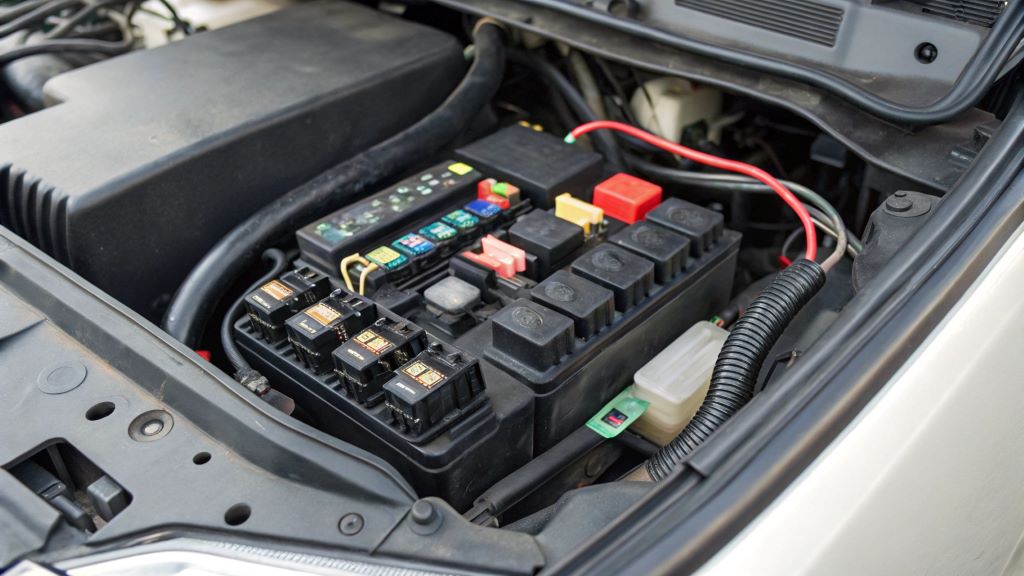
Once you’ve confirmed the relay is faulty, fixing the issue is straightforward and often DIY-friendly. Here’s a step-by-step guide to replacing the relay, along with advanced solutions for complex cases.
Replacing the Fuel Pump Relay
- Gather tools: You’ll need a new relay (typically $10-$25), a screwdriver, and your owner’s manual.
- Locate the relay: Find the fuse box and identify the fuel pump relay using the manual or fuse box diagram.
- Remove the old relay: Pull the relay straight out of its socket. Inspect for burnt pins or corrosion.
- Install the new relay: Push the new relay firmly into the socket, ensuring it’s seated properly.
- Test the system: Turn the ignition to “on” and listen for the fuel pump hum. Start the engine to confirm the repair.
Cost analysis: According to CarTreatments.com, the relay itself costs $10-$25, with labor at a shop adding $50-$100. Doing it yourself saves significantly, as the job takes less than 15 minutes.
Addressing Stuck Relays in TIPM Systems
In vehicles like Dodge or Chrysler models with a Totally Integrated Power Module (TIPM), the fuel pump relay is soldered to the circuit board, complicating replacement. Upfix.com’s 2024 guide suggests two options:
- Professional repair: Send the TIPM to a service like Upfix for relay replacement ($100-$200). This is reliable but requires downtime.
- Bypass method: Use a jumper wire to bypass the relay temporarily, as outlined by CarModsAustralia.com. This involves connecting the fuel pump directly to a fused power source, but it’s a short-term fix that risks electrical damage if not done correctly.
Warning: Bypassing should only be attempted by experienced DIYers, as improper wiring can cause fires or pump failure.
Preventive Maintenance to Avoid Relay Issues
To extend the relay’s lifespan, consider these tips from YourMechanic.com’s 2025 maintenance guide:
- Inspect the fuse box regularly: Check for corrosion or loose connections, which can strain the relay.
- Maintain stable battery voltage: A weak battery (below 12.4V) can overwork the relay, leading to premature failure.
- Clean the engine bay: Dirt and heat can degrade the relay, especially if it’s outside the fuse box.
Advanced Considerations: When It’s Not Just the Relay
Sometimes, relay-like symptoms stem from related components. Here’s how to rule out other culprits:
- Fuel pump failure: A dead pump produces no hum and no fuel pressure. Test pump voltage and pressure with a gauge (normal range: 30-50 psi for most vehicles).
- Clogged fuel filter: A blocked filter causes sputtering or power loss, not a complete no-start. Replace the filter every 30,000 miles, as recommended by O’Reilly Auto Parts.
- Wiring issues: Corroded or loose wires between the relay and pump can mimic relay failure. Inspect the harness for damage.
Data point: A 2023 FCP Euro report found that 20% of fuel pump replacements were unnecessary, with relays or wiring being the actual issue.
FAQs About Fuel Pump Relay Symptoms and Fixes
Q: Can a bad fuel pump relay cause a misfire?
A: Yes, if the relay provides inconsistent power, the fuel pump may deliver uneven fuel pressure, leading to misfires. Check for codes like P0300 alongside P0230 to confirm.
Q: How long does a fuel pump relay last?
A: Most relays last 100,000-200,000 miles, but heat, vibration, and electrical surges can shorten their lifespan, per ScannerAnswers.com.
Q: Can I drive with a bad fuel pump relay?
A: It’s risky. Intermittent failures can cause stalling, leaving you stranded or compromising safety. Replace the relay as soon as possible.
Q: How do I know if it’s the relay or the pump?
A: Test the relay with a multimeter and check for voltage at the pump. If the relay is functional but the pump doesn’t run, the pump is likely faulty.
Conclusion
A failing fuel pump relay can turn a reliable car into a roadside nightmare, but with the right knowledge, you can spot the symptoms early and fix the issue before it escalates. From a silent fuel pump to a stubborn no-start condition, the signs are clear if you know where to look. By understanding the relay’s role, using simple diagnostic tools like a multimeter or OBD-II scanner, and following our step-by-step repair guide, you can save hundreds of dollars and keep your vehicle running smoothly. Regular maintenance, like inspecting the fuse box and maintaining battery health, will further reduce the risk of relay failure. Stay proactive, stay informed, and keep your engine’s heart beating strong.
References:
- com, “Signs of a Bad Fuel Pump Relay,” 2025
- com, “5 Signs Of A Bad Or Failing Fuel Pump Relay,” 2023
- com, “6 Signs of a Bad Fuel Pump Relay,” 2022
- com, “Easy Steps to Find Fuel Pump Relay Location,” 2024
- FCP Euro, “How To Diagnose A Bad Fuel Pump,” 2025
- com, “Common Signs and Symptoms of Bad Fuel Pump Relay,” 2023
- com, “Symptoms of a Bad or Failing Fuel Pump Relay,” 2016
- O’Reilly Auto Parts, “Signs of a Bad Fuel Pump,” 2025
- com, “Bad Fuel Pump Relay Symptoms,” 2024
- com, “Can You Bypass A Fuel Pump Relay?” 2025
Read more:
Seven tips to avoid traffic accidents on the road
Road safety tips to protect lives and improve mobility in cities
