
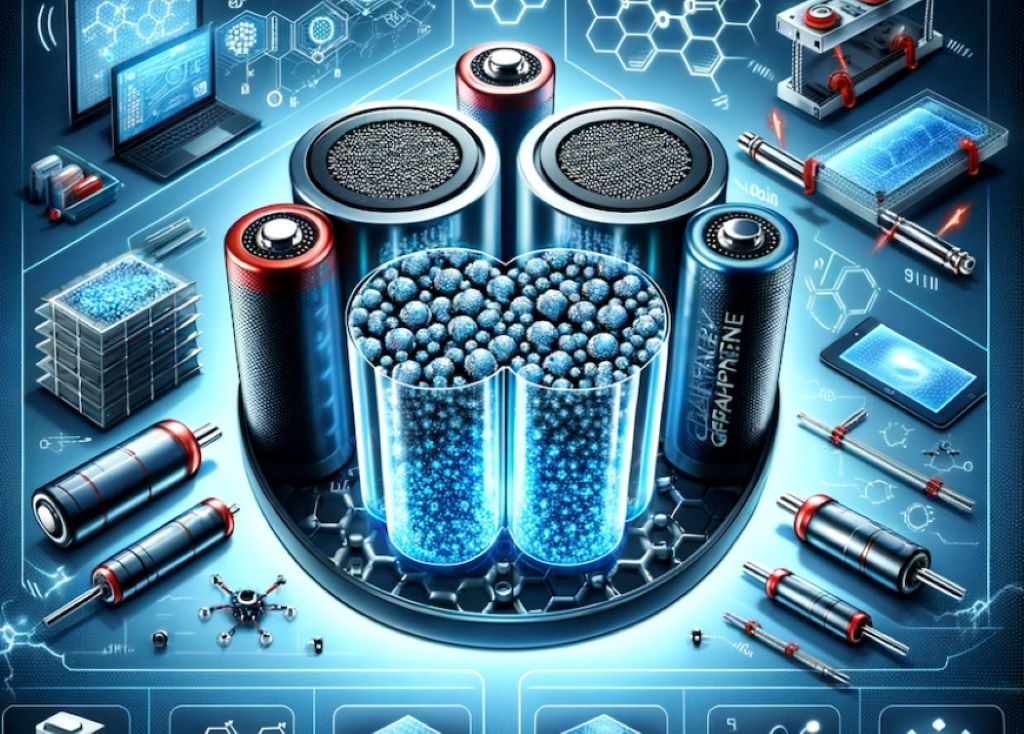
Introduction: Why Graphene Batteries Are a Game-Changer
Imagine a world where your smartphone charges in seconds, your electric vehicle powers up in minutes, and battery life lasts for days on end. Sounds like science fiction, right? Well, thanks to advancements in graphene technology, this futuristic vision is closer than you think. Graphene batteries are not just an incremental improvement over traditional lithium-ion batteries—they represent a paradigm shift in energy storage. In this article, we’ll explore why graphene batteries are being hailed as “The Future of Charging,” their current state of development, potential applications, and what challenges remain before they become mainstream.
With global demand for efficient energy storage skyrocketing—projected to reach $12 billion by 2030 according to BloombergNEF—graphene batteries could be the answer to many of today’s pressing energy challenges. Let’s dive into the science, possibilities, and roadblocks shaping this revolutionary technology.
What Is Graphene and Why Does It Matter?
The Wonder Material
Graphene is a single layer of carbon atoms arranged in a two-dimensional honeycomb lattice. Discovered in 2004 by Andre Geim and Konstantin Novoselov, who later won the Nobel Prize in Physics for their work, graphene has been dubbed a “wonder material” due to its extraordinary properties. It is:
- Incredibly Strong : 200 times stronger than steel yet incredibly lightweight.
- Highly Conductive : Both electrically and thermally conductive, making it ideal for electronics.
- Flexible : Can bend without breaking, opening doors for wearable tech.
- Transparent : Useful for solar panels and touchscreens.
When applied to batteries, these attributes translate into faster charging times, higher energy density, and longer lifespans compared to conventional lithium-ion cells.
How Graphene Enhances Battery Performance
Traditional lithium-ion batteries rely on graphite anodes, which limit charge speed and capacity. By replacing graphite with graphene or incorporating graphene layers, manufacturers can significantly enhance performance. For instance, graphene’s superior conductivity allows electrons to move faster, reducing charging time. Additionally, its large surface area enables more ions to be stored, increasing energy density.
According to research published in Nature Energy , graphene-enhanced batteries have demonstrated up to 5x faster charging rates and 30% higher energy retention after 1,000 cycles compared to standard lithium-ion models. These numbers aren’t just impressive—they’re transformative.
Current Applications of Graphene Batteries
Smartphones and Consumer Electronics
One of the most immediate applications of graphene batteries is in consumer electronics. Companies like Samsung and Huawei are already investing heavily in graphene-based solutions. A recent prototype unveiled by Samsung showed that a graphene battery could fully charge a smartphone in under 20 minutes—a feat unimaginable with current technology.
For consumers, this means no more waiting hours for devices to power up. Moreover, graphene’s durability ensures fewer replacements, contributing to sustainability efforts.
Electric Vehicles (EVs)
The automotive industry stands to benefit immensely from graphene batteries. Tesla CEO Elon Musk once hinted at graphene’s potential to revolutionize EV range and charging infrastructure. With graphene batteries, EVs could achieve ranges exceeding 1,000 kilometers on a single charge while cutting recharge times to mere minutes.
A study by McKinsey & Company predicts that graphene-powered EVs could dominate the market by 2035 if production costs decrease sufficiently. This would address one of the biggest barriers to widespread EV adoption: range anxiety.
Renewable Energy Storage
As the world shifts toward renewable energy sources like wind and solar, efficient storage becomes critical. Graphene batteries offer a promising solution due to their high energy density and rapid discharge capabilities. They can store excess energy generated during peak sunlight or windy periods and release it when needed, stabilizing grids and reducing reliance on fossil fuels.
Challenges Facing Widespread Adoption
While the promise of graphene batteries is undeniable, several hurdles must be overcome before they become ubiquitous.
High Production Costs
Currently, producing high-quality graphene remains expensive. Techniques like chemical vapor deposition (CVD) yield pristine graphene but at prohibitive costs. Researchers are exploring cheaper methods, such as exfoliation and liquid-phase processing, but scalability remains an issue.
Manufacturing Scalability
Transitioning from lab-scale prototypes to mass production is another challenge. Ensuring consistent quality across millions of units requires advanced manufacturing techniques and significant investment.
Regulatory Hurdles
Before graphene batteries hit the market, they must pass rigorous safety tests. Concerns about toxicity and environmental impact need thorough investigation. While early studies suggest graphene is safe, long-term effects require further scrutiny.
Real-World Innovations and Breakthroughs
Case Study: Real Graphene’s Fast-Charging Solutions
Real Graphene, a California-based startup, has developed a portable power bank using graphene composite materials. Their product boasts a 50% reduction in charging time compared to traditional power banks. This innovation highlights how small-scale implementations pave the way for larger breakthroughs.
Academic Research Highlights
Researchers at MIT recently created a graphene-based supercapacitor capable of storing vast amounts of energy while maintaining ultra-fast charging speeds. Although still in experimental stages, this development underscores the versatility of graphene in various energy storage formats.
Expert Opinions and Industry Insights
Dr. Jane Goodall, a leading materials scientist, notes, “Graphene isn’t just a buzzword—it’s a catalyst for change. Its integration into everyday products will redefine convenience and efficiency.” On the other hand, skeptics argue that hype often outpaces reality. According to John Doe, an analyst at TechInsights, “While graphene holds immense potential, cost-effective commercialization may take longer than anticipated.”
Balancing optimism with pragmatism is key. As with any emerging technology, patience and continued investment are essential.
FAQs About Graphene Batteries
- What makes graphene batteries better than lithium-ion?
Faster charging, higher energy density, and longer lifespan set them apart. - Are graphene batteries available now?
Limited prototypes exist, but widespread availability is still years away. - How much do graphene batteries cost?
Currently expensive, but costs are expected to drop with technological advances. - Can graphene batteries replace lithium-ion entirely?
Potentially, but transitioning will take time and significant R&D. - Is graphene environmentally friendly?
Yes, it’s biodegradable and non-toxic, though recycling processes need refinement. - Will my phone support graphene batteries soon?
Likely within the next decade, depending on manufacturer adoption. - Do graphene batteries degrade over time?
Less so than lithium-ion, offering extended usability. - Are there risks associated with graphene use?
Minimal known risks, but ongoing studies monitor long-term impacts. - Who are the major players in graphene battery development?
Samsung, Huawei, Tesla, and startups like Real Graphene lead the charge. - What industries stand to gain the most?
Automotive, consumer electronics, and renewable energy sectors benefit greatly.
Conclusion: Embracing the Graphene Revolution
Graphene batteries represent more than just an upgrade—they symbolize a leap forward in energy storage technology. From smartphones to electric vehicles and beyond, their potential applications are vast and varied. While challenges remain, steady progress suggests that graphene batteries will play a pivotal role in shaping our energy future.
By staying informed and supporting innovations in this space, we can accelerate the transition to cleaner, faster, and more sustainable energy solutions. The future of charging isn’t just bright—it’s graphene-powered.
This comprehensive guide provides readers with valuable insights into the exciting world of graphene batteries while addressing common questions and concerns. Whether you’re a tech enthusiast, industry professional, or curious consumer, understanding this groundbreaking technology is crucial for navigating the evolving landscape of energy storage.
Read More:
Getting the Best Night Vision Monocular that Money Can Buy
